HOME Calendar Consultation Clinic Divination Texts Video Music Theatre Acupuncture Herbs Tuina Nutrition Qigong
PAPERS
GEOMANCY:
What is
Feng Shui? (Environmental Harmony)
Geomancy
is the terrestrial equivalent of astrology, examining the earth’s topological
affect upon winds and waters. Geomancy analyzes space and enhances earth fortune, while astrology analyzes time and reveals
heaven fortune. It is the science of putting human habitats and activities into
harmony with the visible and invisible surrounding world.
Geomancy
recognizes cosmic power points, or energy vortexes that penetrate the earth's
surface. Astrological influences on the seasons (wind) and water source
locations may be utilized in geomancy in order to propagate better architecture
and agriculture. Becoming familiar with these influential patterns of wind and
water invite successful insights into foretelling future cycles seen in nature
(used in YiJing divination and Tarot). (Pennick)
Feng
=
wind is the elemental vehicle of heaven
Shui
= water is the elemental vehicle of earth
Feng
Shui
= wind water = heaven and earth interacting in environmental harmony
Objectives:
The simple objective is to
treat one's environment in order to increase one's fortune, or connection with
nature's source. This is done best by combining aggressive and passive methods
of remedy.
-
ž Aggressive: Increase energy in auspicious direction to bring good fortune
-
ž Passive: Deflect or remedy dangers inherent in an inauspicious direction
Considerations:
There are various scopes that can be adopted when
considering the quality, or compatibility of a place that can enhance personal
energy and relationships.
-
ž Site: a ‘place’, plot of land, or building being investigated (history)
-
ž Location: surroundings visible from the site (roads, rivers)
-
ž Environment: refers to the qualities of the location determined by natural or human-made features (neighboring influence)
-
ž Orientation: refers to the direction faced (entrance) by the site, determined through the use of magnetic compass
-
ž Earth Meridians: electromagnetic grid and energy vortexes (power of place)
The
environment is classified in terms of rural and urban.
Rural:
Rural features include
natural and human-made.
Natural:
mountains, hills, prominence, rock shapes, isolated trees, groups of trees,
lakes, ponds, sea shore, rivers, streams, waterfalls, veins in rocks, valleys
and gullies, notches in the skyline
Genius
loci,
“the spirit of place,” suggests that the earth is a conscious living spirit
(called Gaia by the Greeks). This notion was innately realized and accepted by
animal herds and nomadic tribes who migrate in harmony with the seasons. Ritual
sacrifice was also traditionally practiced in energy vortexes at specific
astrological dates as an offering to nature.
Natural
sites of spiritual power, untouched by human activity, including trees, wells,
hills, caves, rocks, and rivers, have been entities of cult worship amongst
Taoists and other religious traditions.
Springs
and wells give life as the birthplace of rivers. Wells at the source of life are
often associated with saints. Sacred waters have the therapeutic power to cure
illness and bring insight to future portents.
Trees
are conduits that link earth to heaven through their roots and branches. Their
unique characteristics make them prominent landmarks for meetings and marriages
(marriage oaks). Since trees are sacred conduits demarking axis mundi, it
was a serious offense to injure a tree. In Ireland, towns have been named after
holy trees, ‘skeog,' (Birmingham, Goff’s Oak).
Stones
are also prominent landmarks that have inspired famous hymns, like the “Rock
of Ages.” Shrines use stones, especially meteors (stones fallen from heaven)
as their foundation. Mecca, the center of the Islamic world, is founded on a
stone that was believed to have fallen from the sky.
Hills
and mountains touch the heaven therefore hills are associated with communication
with the gods. Every religion on earth has put shrines on hills. Just to reach
the shrine requires physical effort. In feng shui, mountains correspond
to planets. Stonehenge, an astronomically oriented circle of stones used for
divination and sacrifice, measured the position of the sun throughout the year
to determine the solstices, equinoxes, and eclipses.
The Bearing Strait migration theory states that the Native American peoples came
to North America when it was connected to Asia. This theory would explain the
structural similarity in the shaman traditions of Native Americans and the
Fangshi
Taoists. Native American traditions (ie. Pueblo, Hopi, and Zuni) identify
the forces of nature with ceremonial houses, or temples, (kiva) for
spirits. Clouds housed the rainmakers. Mountains housed the cardinal spirits.
The sun was a sky house during the day and an underworld house at night. The
sacred lake housed the ancestors. Without the kiva, spirits were
dangerous and unpredictable. Houses became the focus for communication with the
upper (feathers) and lower (seeds) spirit worlds and the cardinal supernaturals.
The idea of kiva integrated the building (microcosm) with the cosmos
(macrocosm), edificial alchemy (feng shui to the Chinese).
Human-made:
fields, hedges, canals, conduits, ponds, reservoirs, fountains, roads, bridges,
railways, wires, quarries, tunnels, mines,
Urban:
Urban features include
utilities, residential, monumental, military, industrial, and heavily built-up
areas.
Utilities:
telephone poles and wires, lamp posts, drains, culverts, gas pipes, conduits
Residential:
houses, blocks of flats, terraces, mansions, cottages
Residential
Adjuncts:
roads, driveways, gardens, ponds
Memorial/Monumental:
obelisks, ceremonial gates, triumphal arches, commemorative pillars, open
squares, market places, schools, churches, hospitals, public buildings, follies,
theatres
In
Chinese temple architecture, the roof delineated the constellations (sky) and
the floor divided the earth.
Military:
castles, forts, battlements, walls, human-made hills
Industrial:
chimneys, pylons, gas-holders, storage tanks, cooling towers
Heavily
Built-up Areas: proximity of other buildings, proximity of walls
and windows, shapes of roofs against skyline, blank walls, alley ways, walls of
buildings forming angles, unusual ornamentation of roofs, direction of roads and
driveways, stairways, utility pipes: drains, water, gas
“Although
the environmental features may be the same for neighboring sites within any
given location, the qualities of those features will vary according to the
actual position of each site within that location.”
“The
environmental features for a site vary according to the site’s orientation.”
The home is an extension
of the self. How one treats the home is a reflection on how one treats the self.
The home is fundamentally evaluated through orientation, shape, troubleshooting,
residential features, rooms, and decorating and artifacts.
Orientation:
The house should be centered in the middle of the site. The most auspicious entrance facing direction can be determined through a variety of different methods. (see bagua theories below)
Shape:
-
ž Auspicious: rectangle, octagonal
-
ž Inauspicious: L, U, T, H, irregular, too many corners, triangle
Troubleshooting:
Continual
Maintenance
-
ž Remove clutter and clean out dirt
-
ž Remove dead plants
-
ž Suppress machine noise
-
ž Keep lights discreet
-
ž Hide or bundle electrical cables
Residential
Features:
The main residential features include the main door, doors, windows, stairs, corridors, walls, ceilings, structural beams, gardens, yards, pools, ponds, and driveways.
Main Door:
-
ž Main door orientations emit qi
-
ž Gardens, curving walks, transitional spaces encourage harmonious qi to main door
-
ž Should open inward into a bright lobby, capturing a large interior view
-
ž Consider color and lighting
-
ž Never open into an obstruction or poison arrow
-
ž Front and back door should be off axis
-
ž Should face auspicious direction of the head of household (auspicious door position relates directly to auspicious direction of one’s kua number)
-
ž Remedy: wind chimes
Doors:
-
ž Should open into main space of room
-
ž Should not clash with other doors
-
ž Should open entirely free from blockage or jam
-
ž Should be solid (opaque surface)
-
ž Remedy a door at the end of a long corridor
-
ž Locks and hinges should be oiled
-
ž Should be kept well painted
-
ž Revolving doors deflect sha
Windows:
-
ž Should preferably open outward (let stagnant qi out)
-
ž Should be positioned to welcome fresh air, shield glare, and capture the best views
-
ž Should avoid views of poison arrows and offending or overwhelming views
-
ž Should have a good ratio of windows to doors (approx.: 3:1)
-
ž Should not stick
-
ž Should be clean
-
ž Remedy: crystals
Stairs:
-
ž Should not face door
-
ž Should be wide, brightly lit, and slightly curved
-
ž Avoid stairs without backs
-
ž Stair surface should be covered
-
ž Communal stairs should be located at the sides of the building
-
ž Spiral stairs need to be remedied (climbing plant or green ribbon on banister)
Corridors:
-
ž Should be wide and well lit
-
ž Mirrors and banners can seemingly alter the length of a corridor
Walls, Ceilings, and Structural beams:
-
ž Walls block sha
-
ž Sloped ceilings suppress qi and should not drop below eye level (avoid sleeping, working, and sitting)
-
ž Avoid placing furniture under beams; exposed beams accelerates qi flow (break continuity of beam with banner, mobile, etc.)
-
ž Paint low ceilings white and high ceiling dark
-
ž Cornices prevent stagnant qi
-
ž Protruding Corners (poison arrows): use plants, lights, wrapped mirrors, or chimes to cover
Garden/Yards:
-
ž Keep boundary low or open to encourage qi flow (hedge, trellis)
-
ž Mark a boundary to inhibit neighboring sha
-
ž Use plant beds to accent curving paths and drives
-
ž Water is essential and a multi-remedy (fountain, bath, pond, spring; goldfish in pond if in wealth auspice)
-
ž Trees and lights can extend or fill boundaries, or expand narrow areas
-
ž Leaf shape encourage the appropriate element
-
ž Avoid thorny plants unless the scent is good
-
ž Climbing plants on bare walls are good
-
ž Keep dead plants out
Pools/Ponds:
-
ž May drain qi
-
ž Large: too much yin
-
ž Circular, kidney-shaped, irregular: best
-
ž Should be balanced in size and maintained
Driveways:
-
ž Driveways and paths should be wide, gently curving and sloping slightly away from the house
-
ž Semi-circular drives are ideal
-
-
ž Too wide: qi flows away
-
ž Too narrow: qi constricts
Rooms:
Typical rooms include
bedroom, living room, kitchen, dining, study, and bathroom.
-
ž Square, wide, bright, and neat shaped rooms encourage qi flow
-
ž Irregular shaped rooms suppress qi
-
ž Rooms should make one feel happy and comfortable
-
ž Master bedroom and entrance hall should be in harmony with the horoscope of the owner
-
ž Consider the relationship between the Bagua and family members
Bedroom: most important (1/3 of life
spent sleeping)
-
ž Bed should not face window, door, or mirror
-
ž Mirrors in the bedroom cause discord between husband and wife (introduces a third party)
-
ž Position bed slightly off the northern axis
-
ž Do not store items under bed
-
ž Avoid lights directly over the bed
-
ž Sleeping in the prosperity location (8 locations) is most auspicious, or having head pointed in prosperity direction
Living/Sitting:
-
ž Octagonal arrangement of furniture with walls
-
ž Arrange furniture around focal points (fireplace, TV, table)
-
ž Remedy dead spaces with plants
Kitchen:
-
ž Should be well lit, ventilated, and spacious
-
ž Stove (fire mouth) direction should face the head-of-the-household’s most auspicious direction
-
ž Position the sink away from the stove
-
ž Open shelves (knives) should be in cabinets
-
ž Use reflective (stainless steel) countertops for safety
-
ž Islands and tables in the pathway are good for safety to slow down circulation
-
ž Worker's back should never face the kitchen door when working
-
ž Kitchen door should never face the main entrance
Dining:
-
ž Dining area should be situated away from bathroom or front door
-
ž Never situate under living room or kitchen
-
ž Table should be round (heaven) and encourage circulation
-
ž An even number of chairs is lucky
-
ž Table should be centered under light
-
ž Small tables are better than cramped tables
-
ž Mirrors make the meal seem bigger (abundance)
Study:
-
ž Avoid placing study near front door (money could leak out)
-
ž Desk should be in according position with favorable palace of the desk user
-
ž Desk should face door (authoritative)
-
ž Do not position desk diagonally across corner (creating dead space behind chair)
-
ž Desk should not be floating in the middle of room (sha steals achievement)
Bathroom:
-
ž Place away from entrance and kitchen; preferably at the sides of the house
-
ž Never locate the bathroom at the end of a long corridor
-
ž Never locate at the center location of the house
-
ž Never locate in the marriage (SW), family (E), or wealth (SE) locations of the house
-
ž Avoid placing lavatory directly in front of the main entrance
-
ž If possible hide toilet with partition in large bathrooms
-
ž Keep door visible when using lavatory
-
ž Keep bathroom door and lid of lavatory closed (prevent money from leaking)
Decorating/Artifacts:
This is the
careful
use of symbolism through plants, lighting, furnishings, art, patterns, and
color.
Plants:
-
ž Use to diffuse corners or square columns
-
-
ž Peach: health and longevity (place in E)
-
ž Red flowers: fame (place in S)
-
ž Plum Blossom: great good fortune
-
ž Peony: marriage (place in SW)
-
ž Money Plant: wealth
Lighting (fire): favorable locations for
placement is S, SE, NE, E
-
ž Crystals (earth): marriage (place in SW); rainbows in E or W
-
ž Entrance should be lit
-
ž Chandeliers: should be centered
Furnishings:
-
ž Five elements: materials, color
-
ž Arrangement in room: Bagua is most auspicious
-
ž Dimensions:
Art:
Paintings:
-
ž Scenic: balance
-
ž Plants and flowers: good fortune and endurance
-
ž Legendary figures: repel evil
Sculpture:
-
ž Fu, Lu, Shou Gods: happiness, prosperity, longevity
-
ž Lions: protection
Patterns: walls, floors, and ceilings
Animals:
-
ž Elephant: wisdom
-
ž Phoenix/dragon: balance
-
ž Fish scales: success
-
ž Dragon Horse/Unicorn (Chi ling): wisdom, joy, longevity, illustrious offspring
-
ž Bats: luck, longevity
-
ž Cranes: fidelity, honesty, longevity
-
ž Deer: wealth, longevity
-
ž Frog: arrival of wealth; place inside main door
-
ž Horse: fame (place in S), speed, perseverance
-
ž Turtle: longevity
-
ž Hare: longevity
-
ž Cicada: longevity
-
ž Peacock: dignity, beauty
-
ž Bear: protection
Plants:
-
ž Pine tree: longevity and endurance
-
ž Lotus: endurance, uprightness
-
ž Fruit: luck
-
ž Bamboo: good wishes
-
ž Flowers: wealth
Elements:
-
ž Water ripples: wealth, heavenly blessing; place on N wall
-
ž Clouds: wisdom
Immortals:
-
ž Old man, tortoise shell: longevity
-
ž 8 symbols/immortals: longevity
Color:
Should be considered in accordance with the Five
Elements and Bagua-Loshu location.
-
ž Green: tonifies good energy
-
ž Gold: supports
-
ž Red: cures sha
The business is
fundamentally evaluated through the lot, main entrance, office, address
numerology, and tips for activating wealth.
Lot:
Examination of the lot
can provide the ideal location and orientation for the structure.
Ideal Location:
-
ž On a curving, slow moving road
-
ž On a corner
-
ž Has open space in front of main entrance
-
ž Has protection in back
-
ž Buildings at left (dragon) are taller than buildings on right (tiger)
Examinations:
-
ž Neighbors: views, offenses, history
-
ž Approach Roads: poison arrows, slope, traffic, fly-overs, facing T-junctions
Ideal Orientations:
|
Fortunate Orientation of
Office or Shop |
|
|
Office/Shop
Type |
Fortunate
Direction |
|
Law firm, medical center, shipping company |
N, E |
|
Accounting, finance, bank, architecture |
NW, SE |
|
Import/export, trading |
N, E |
|
Provision shop, saloon |
N, SE |
Main
Entrance:
Direction
faced
The main entrance is an indicator of wealth.
Wealth: SE; Using owner's gua
number
Office:
Proper placement and
orientation of the doors, receptionist, desks, and boardroom features are
factors that can enhance the energy of the office space.
Door:
-
ž Should never face across from a bathroom door
-
ž Should never face another door, window, back door, or escalator
-
ž Should never be at the end of a corridor
-
ž Should stagger doors in floor plan of office arrangement
-
ž For wealth auspiciousness, have door face best (1st) direction pertaining to one’s yearly kua number
Receptionist:
-
ž Desk should not face main door
-
ž Back of receptionist should be supported by wall
Desk:
-
ž Position in the corner opposite the door with the back supported by the wall
-
ž For personal advancement auspiciousness, the personal direction faced in the office should be the 4th best direction pertaining to one's yearly gua number
Boardroom:
-
ž CEO chair should be supported by furthest wall from door
-
ž CEO chair should face CEO gua number most favorable direction
-
ž Element color of room should be that of CEO element of yearly stem
Address
Numerology:
Address numerology
indicates good fortune and specific meaning.
Lucky Numbers: 2, 5, 6, 8, 9, 10
Number Meanings:
2 = easy
5 = harmony (5 elements)
6 = wealth
8 = becoming rich
9 = longevity
10 = certainty, sure
double digits = duality
Activating
Wealth:
Wealth can be activated through the use of water,
coins, logo, and cash register modifications.
Water:
-
ž Should be in view of main entrance
-
ž Water should flow past main entrance in an auspicious direction
-
ž Should flow left to right for main entrance in SE, SW, NE, NW; and vice versa
Coins:
in SE
Logo:
in SE
Cash
Register:
-
ž Mirror: reflecting cash register, facing main entrance
-
ž Hanging flutes: slanting upwards above register
The
form school and compass school are now blended in various formulas to
appropriately adapt to the situation in context.
Form
School:
Dragon
Symbolism
Founded
by Master Yang, the Form School requires the presence of the cosmic dragon’s
breath in the position, shape, and direction of yin and yang topological
features, or rivers and mountains respectively. Energy forces effecting human
fate are called ‘dragon lines.' This method relies more on the intuition of
the practitioner.
Compass
School:
YiJing
Philosophy
A
later method developed from YiJing
philosophy, compass directions, and an individual's date of birth to determine
auspicious directions and locations. This method relies on mathematics to derive
metaphysical speculation on numerology.
Formulas:
-
ž East-West House
-
ž Eight Locations
-
ž Bagua-Luoshu
-
ž Combined Applications
-
ž Flying Star Geomancy
“If light is called the life-blood of an
architectonic form, darkness could rightly be called its soul.” –Tiao Chang
Yin:
shade, negative space, rivers, roads, windows and
doors (openings)
Sha:
negative qualities (straight lines)
-
ž Unstable Ground: faults and fissures
-
ž Straight Lines: gullies, tunnels, central passageways within a building, through rooms w/windows at each end
-
ž Poison Arrows: corners of buildings, edges of buildings, roads and pathways, telephone wires directed toward the site, staircases opposite doors
-
ž Obstructions: telephone poles, lamp posts, tall trees blocking windows
-
ž Overwhelming Views: flyovers and ramps, crosses and steeples
-
ž Death: a place that makes us feel bored and uninspired; close to abodes of the dead or sick (cemeteries, hospitals)
Yang:
light, positive space, mountains, buildings, walls
Qi:
positive qualities (curves)
-
ž Gentle curves
-
ž Life: a place that makes us feel happy and comfortable
FOUR DIRECTIONS OF THE CELESTIAL ANIMALS
Four Palaces
The
four emblems may equate to the four points of the compass, but only when
orientation of a building is south. The four emblematic animals characterize the
four facing walls in a space. Each direction has an ideal setting. The dragon
direction is the most auspicious of the four directions.
FOUR
CELESTIAL ANIMALS
|
||||||
|
Colored
Animal |
Polarity |
Season |
Direction |
Element |
Building
Orientation (Emblems) |
Portent
Quality |
|
Green
Dragon |
(+) |
Spring |
East |
Wood |
Right |
Abundance |
|
Red
Bird |
(+) |
Summer |
South |
Fire |
Front |
Fame |
|
White
Tiger |
(-) |
Autumn |
West |
Metal |
Left |
Ferocity |
|
Black
Tortoise |
(-) |
Winter |
North |
Water |
Back |
Protection |
Facing
Walls:
Walls
are called particular celestial animals according to the (outer) direction they
face.
Ideal
Setting:
The ideal setting depends on the shape, or features,
of the space in a designated direction, the dragon feature locations, and
troubleshooting site precautions.
Shape
Descriptions:
-
ž Dragon: has higher, more rugged, and more prominent hill
-
ž Bird: open, sunken courtyard, pool, deciduous trees, rocks or feature representing a red bird; land slopes gently away
-
ž Tiger: has smaller hill; flat plain; stream blocking the unpredictable qi
-
ž Tortoise: higher mountains, coniferous trees, buffer zone (protection)
Capturing
the Dragon’s Breath:
-
ž The dragon and tiger are mutually existent.
-
ž It is best for the dragon to dominate the tiger.
-
ž It is favorable when the dragon and tiger embrace (wrap around each other).
-
ž It is very favorable when the scenic features of the dragon can be distinguished.
-
ž It is unfavorable to destroy the scenic features of the dragon.
-
-
ž Capture views to slow moving water and lush vegetation
-
ž Site possess open land (the bright hall) in front of the main entrance
-
ž Site is located on undulating hills
Notes
on the Water Dragon Classic:
Natural:
-
ž Water is a symbol of wealth and prosperity.
-
ž The river is the symbol of the dragon.
-
ž The water brings qi if it meanders smoothly and cleanly. This rate of flow allows the qi to settle, which is auspicious.
Artificial:
-
ž Reflecting Pools: the closer to the building, the smaller they should be
5 Elements:
-
ž When the watercourses meet or meander, the five elements interact.
-
ž Metal: large curves
-
ž Fire: zig-zag
-
ž Earth: sharp turn
Flow Portents:
-
ž Flows rapidly away from site: qi disperses, no wealth
-
ž Comes in straight towards site: injury
-
ž Darts left: misfortune for eldest son
-
ž Darts right: youngest son meets calamity
Auspicious:
-
ž The water (belly of dragon) wraps around the site
Site
Precautions:
-
ž Weather: Study the site as it interacts throughout the day and the seasons of the year. Take note of the sun angle, wind directional patterns, and the elements. The bad winds originate in the north and northeast (the gateway to hell).
-
ž Sites on Peaks: Qi is dispersed quickly because water flows away rapidly. Also the peak is exposed to the elements.
-
ž Threatening rock formations
-
ž Avoid places exposed to elements: peaks, plains
The five elements may help characterize a building or
site in terms of its industrial purpose, area of designated use, building shape,
or building materials. Elemental laws should be utilized to find their balanced
integration.
APPROPRIATE ELEMENT FOR
ITEMS
|
|||||
|
Item |
Wood |
Fire |
Earth |
Metal |
Water |
|
Commerce and Industry |
Artist
studio, café, carpentry, catering establishment, hospital, nursery,
residence, restaurant, watch tower |
Chemistry,
library |
Blocks of
flats, building, ceramics, civil engineering, farming |
|
Advertising,
arts, brewing, communications, distilling, electricity, literature, media,
music, oil wells |
|
Residential |
Bedroom,
children’s room, dining room |
Kitchen,
library |
Garage,
storeroom |
Workshop |
Bathroom,
laundry |
|
Architectural Shapes and
Features |
Column,
pillar |
Angles,
steeple |
Bricks,
squares, tunnels |
Arches,
domes |
Windows,
post |
|
Substances, Materials, and
Objects |
Furniture,
plants, trees, vegetables |
Animals,
blood, furnace, leather |
Clay,
plains |
Coinage,
hardware, jewelry, knives, money, railways, swords |
Glass |
ENVIRONMENTAL
INFLUENCES ON SITE
|
|
|||||
Site Elements
|
Environmental
Elements
|
|
||||
|
WOOD
(Columnar) |
FIRE
|
EARTH
|
METAL
(Round) |
WATER
(Irregular and Undulating) |
||
|
WOOD |
g |
q |
L |
N |
[ |
|
|
FIRE |
[ |
g |
q |
L |
N |
|
|
EARTH |
N |
[ |
g |
q |
L |
|
|
METAL |
L |
N |
[ |
g |
q |
|
|
WATER |
q |
L |
N |
[ |
g |
|
|
Key: g
= stable q
= weak (controlling) L
= unhappy: counteracting (destructive) N
= danger (threatening): interacting is either restraining or overacting
(destructive) [
= ideal (controlling): interpromoting (generative) |
|
|||||
EIGHT TRIGRAMS AND NINE PALACES
The eight trigram-nine palace symbol provides several theories of geomancy, emphasized in the compass school. These theories include: eight remedies, east-west house, eight locations, bagua-luoshu, combined applications, and flying star.
|
THE
RULE OF NINE WITH TRIGRAMS |
|||||||||
|
Eight
Trigrams |
|||||||||
|
Attribute |
QIaN |
SUN |
LI |
GEN |
CHUNG |
DUI |
KAN |
ZHEN |
KUN |
|
Image |
Heaven |
Wind/
Wood |
Fire/Heat
(lightning,
sun) |
Mountain |
Center |
Sea/
(lake) |
Water/
Lake
(moon) |
Thunder |
Earth |
|
Family Member |
Father |
Eldest
daughter |
Middle
daughter |
Youngest
son |
|
Youngest
daughter |
Middle
son |
Eldest
son |
Mother |
|
Later
Heaven
Sequence Direction |
NW |
SE |
S |
NE |
Center |
W |
N |
E |
SW |
|
Former
Heaven
Sequence Direction |
S |
SW |
E |
NW |
Center |
SE |
W |
NE |
N |
|
Element |
Metal
(big) |
Wood
(small) |
Fire |
Earth
(small) |
|
Metal
(small) |
Water |
Wood
(big) |
Earth
(big) |
|
Property |
Creative |
Gentle |
Clinging |
Keeping
still |
|
Joyous |
Abysmal |
Arousing |
Receptive |
|
Aspiration |
Mentors |
Wealth |
Fame |
Know-ledge |
Peace |
Children |
Career |
Family |
Marriage |
|
Trigram Color |
Gray/
white, silver, gold |
Purple/
green |
Red/
red |
Turquoise/
beige |
|
White/
white, silver, gold |
Black/
black, blue |
Green/
green brown |
Yellow/
beige yellow |
|
Feature |
Metallic |
Plants |
Lights |
Mountain |
|
Metallic |
Aquarium,
ponds |
Trees |
Planet |
|
Civil Works |
Circles |
Business |
Weaponry |
Gates |
|
Reflections |
Wheels |
Roads |
Squares |
|
Nine
Palaces |
|||||||||
|
Palace Number |
6 |
4 |
9 |
8 |
5 |
7 |
1 |
3 |
2 |
|
Palace Color |
White |
Turquoise-green |
Purple |
White |
Yellow |
Red |
White |
Jade-green
(blue) |
Black |
|
Palace Portent |
B |
B |
B, M |
B |
M |
B,
M, N |
B
|
B,
M, N
|
M
|
|
Palace Animal |
White
tiger |
Light
green dragon |
Bird |
Yellow
snake |
Red
tiger |
Turtle |
Dark
green dragon |
Yellow
snake |
|
Notes:
-
ž The sequence always aligns on the door or entrance of the space; the application is flexible to the scope examined (lots, buildings, rooms, furniture)
-
ž The direction (using the later heaven sequence) the site faces by the main door will determine the nine-square portent arrangement
Feng
Shui
and YiJing Consultation Methods:
1)
To see if an area is favorable, the former heaven
sequence was imposed over the later heaven sequence (of the annual magic
square), and the trigram conjunction (hexagram) is referred to in the YiJing.
2)
Place the trigram of the 9 square area over the
trigram of the direction faced.
Eight
Remedies:
Directional Influence on Qi and Sha
-
ž Movement: flag, banner, ribbon, fountain, mobile, chimes, incense, pinwheel, revolving door, fan
-
ž Color: 5 element
-
ž Machines: appliances
-
ž Life: plants, fish, money, artificial plants
-
ž Light: mirrors, lights, crystals
-
ž Straight Lines, Hollow Objects: fan, sword, bamboo
-
ž Stillness: statue, boulders, stones, sculpture
-
ž Sounds: chimes, bells
|
DIRECTIONAL INFLUENCE ON QI
AND SHA WITH THE FORMER SEQUENCE |
|||
|
Direction |
Qi |
Sha: Consequential Effect |
Eight
Remedies |
|
N |
Nurturing |
Lingering: laziness |
Movement:
flag, banner, ribbon, fountain, mobile, chimes, incense, pinwheel |
|
NE |
Flourishing
|
Stagnating: illness
|
Color:
5 elements |
|
E |
Growing |
Overpowering:
egotistical |
Machines:
appliance |
|
SE |
Creative
|
Provoking:
irritability |
Life:
plants, fish, money |
|
S |
Vigorous
|
Accelerating:
exhaustion
|
Light:
mirrors,
lights |
|
SW |
Soothing
|
Disruptive: anger
|
Straight
Lines:
fan, sword, bamboo |
|
W |
Changeable
|
Dangerous: rash
|
Stillness:
statue |
|
NW |
Expansive
|
Unpredictable:
unsettled |
Sounds:
chimes |
|
EIGHT REMEDIES FOR THE
ASPIRATIONS OF THE LATER SEQUENCE |
|||
|
Direction |
Trigram:
Image |
Aspiration |
Ideal
Remedy |
|
N |
Kan:
Water |
Career |
Life (fish) |
|
NE |
Gen:
Mountain |
Knowledge |
Light (crystals) |
|
E |
Zhen:
Thunder |
Family |
Life (plants) |
|
SE |
Sun:
Wind |
Wealth |
Life (plants) |
|
S |
Li:
Fire |
Fame |
Light (bright lights) |
|
SW |
Kun:
Earth |
Marriage |
Light (crystals) |
|
W |
Dui:
Sea |
Children |
Sound (chimes) |
|
NW |
Qian:
Heaven |
Mentors |
Sound (chimes) |
East-West
House Theory:
The East-West House Theory states there are eight
house types, which correlate directly to the eight trigrams, or Bagua structure. The eight trigrams are divided into two houses, the
east and west. This theory determines which trigram and trigram attributes
(element) rules the place investigated. It is auspicious for the ruling trigram
to be compatible with the natal number of the building user, or owner, and the
annual number.
|
EAST-WEST HOUSE TYPE
ATTRIBUTES |
|||
|
Trigram |
Front
Door |
Back
Door |
Element |
|
EAST HOUSE |
|||
|
Li |
N |
S |
Fire |
|
Kan |
S |
N |
Water |
|
Zhen |
W |
E |
Wood |
|
Sun |
NW |
SE |
Wood |
|
WEST HOUSE |
|||
|
Qian |
SE |
NW |
Metal |
|
Kun |
NE |
SW |
Earth |
|
Gen |
SW |
NE |
Earth |
|
Dui |
E |
W |
Metal |
Identification of Place
Type:
To determine the house type of a place, simply
determine the direction the front or back door faces (from the inside looking
out). When in doubt, use the back door as the determining factor. The back door directly corresponds to the trigram direction,
whereas the front door corresponds to the opposite trigram direction.
-
ž East Type House (water, wood, fire): To enhance an Eastern Type House use remedies of life, light, or movement (water structure) near the front door, or corresponding Bagua aspiration locations.
-
ž West Type House (metal, earth): To enhance a Western Type House use chimes and crystals in the corresponding Bagua aspiration locations.
Identification of Person
Type:
It is auspicious for a person to live in a place
with a similar house type. To determine the house type of a person, find the
natal (gua) number of birth and
determine its position on the Luoshu Magic
Square. Determine the fortunate and unfortunate locations and directions
corresponding to the person's gua
number. If there is no correspondence between the gua
numbers of the person and the place, adjust the areas through rearrangement,
reduction, or enhancement.
-
ž Eastern Person's Fortunate Locations/Western Person's Unfortunate Locations: S, E, SE, N
-
ž Western Person's Fortunate Locations/Eastern Person's Unfortunate Locations: W, SW, NW, NE
Calculating Annual Number to find Natal/gua Number:
1)
Calculate the annual number:
corresponds to year of birth
2)
Find the solar month of birth:
to confirm the Chinese year of birth and to find natal number
3)
Find the natal number: use
table by cross referring annual number with solar month
4)
Find natal number attributes:
the most harmonious place in the building is the one whose ruling element
generates the element associated with a person’s natal number
Annual and Natal (gua) Numbers:
Annual numbers progress in reverse order. The natal
(gua) number for a man is the same as
the annual number of the year for the year he is born. The natal (gua)
number for a woman progresses in direct sequence. The male and female natal
numbers coincide at the number 3.
Methods:
-
ž Table
-
ž Formula: 2 methods
Table of Derivation:
|
DERIVATION OF NATAL (KUA)
NUMBERS |
|||
|
Corresponding
Solar Year |
Annual
Number |
Male
Natal (gua) Number |
Female
Natal (gua) Number |
|
1985 |
6 |
6 |
9 |
|
1986 |
5 |
5 |
1 |
|
1987 |
4 |
4 |
2 |
|
1988 |
3 |
3 |
3 |
|
1989 |
2 |
2 |
4 |
|
1990 |
1 |
1 |
5 |
|
1991 |
9 |
9 |
6 |
|
1992 |
8 |
8 |
7 |
|
1993 |
7 |
7 |
8 |
|
1994 |
6 |
6 |
9 |
|
1995 |
5 |
5 |
1 |
|
1996 |
4 |
4 |
2 |
|
1997 |
3 |
3 |
3 |
|
1998 |
2 |
2 |
4 |
|
1999 |
1 |
1 |
5 |
|
2000 |
9 |
9 |
6 |
|
2001 |
8 |
8 |
7 |
|
2002 |
7 |
7 |
8 |
|
2003 |
6 |
6 |
9 |
Formulas of Derivation: factor of 10 is used for
the 20th century; 9 for 21st century
ž
Male Method 1:
1)
Add last 2 digits of year of birth
2)
If sum is 10 or more, then add digits together to reduce to single digit
number
3)
Subtract from 10 to find the resulting male natal (gua)
number
ž
Male Method 2: Male Natal (gua) Number: K = 10 – (y
modulus 9)
1)
Let the last two digits of the solar year be y
2)
Divide y by
9
3)
If the remainder is 0, let it be 9
4)
Subtract the remainder from 10
5)
The result
is the male natal (gua) number
ž
Female Method 1:
1)
Add last 2 digits of year of birth
2)
If sum is 10 or more, then add digits together to
reduce to single digit number
3)
Then add 5
4)
If sum is 10 or more, then add digits together to
reduce to single digit number; the result is the female natal (gua) number
ž
Female Method 2: Female Natal (gua) Number: K = (y
+ 5) modulus 9
1)
Let the last two digits of the solar year be y
2)
Add 5
3)
Divide the result by 9
4)
If the remainder is 0, let it be 9
5)
The remainder
is the female natal (gua) number
Notes:
ž
Male Natal number 5 reads as 2 for determining
auspicious locations and directions
ž
Female Natal number 5 reads as 8 for determining
auspicious locations and directions
Solar Month and Natal
Number:
|
TABLE OF SOLAR MONTHS AND
NATAL NUMBERS |
||||||
|
Solar
Month (refer to Farmer’s Calendar with commencement date) |
Annual Number |
|||||
|
1
4
7 |
2
5
8 |
3
6
9 |
||||
|
M
|
F |
M
|
F |
M
|
F |
|
|
1
Feb |
8 |
7 |
2 |
4 |
5 |
1 |
|
2
Mar |
7 |
8 |
1 |
5 |
4 |
2 |
|
3
Apr |
6 |
9 |
9 |
6 |
3 |
3 |
|
4
May |
5 |
1 |
8 |
7 |
2 |
4 |
|
5
June |
4 |
2 |
7 |
8 |
1 |
5 |
|
6
July |
3 |
3 |
6 |
9 |
9 |
6 |
|
7
Aug |
2 |
4 |
5 |
1 |
8 |
7 |
|
8
Sept |
1 |
5 |
4 |
2 |
7 |
8 |
|
9
Oct |
9 |
6 |
3 |
3 |
6 |
9 |
|
10
Nov |
8 |
7 |
2 |
4 |
5 |
1 |
|
11
Dec |
7 |
8 |
1 |
5 |
4 |
2 |
|
12
Jan |
6 |
9 |
9 |
6 |
3 |
3 |
Natal Number Attributes:
|
NATAL NUMBER ATTRIBUTES |
||||||
|
Natal
Number |
Trigram |
Direction |
Polarity |
Weft |
Bias |
Element |
|
1 |
Kan |
N |
Yang |
E |
L |
Water |
|
2 |
Kun |
SW |
Yin |
W |
R |
Earth |
|
3 |
Zhen |
E |
Yang |
E |
L |
Wood |
|
4 |
Sun |
SE |
Yin |
E |
R |
Wood |
|
5
(m) |
Kun |
NE |
Yang |
W |
L |
Earth |
|
5
(f) |
Gen |
SW |
Yin |
W |
R |
Earth |
|
6 |
Qian |
NW |
Yin |
W |
L |
Metal |
|
7 |
Dui |
W |
Yang |
W |
R |
Metal |
|
8 |
Gen |
NE |
Yin |
W |
L |
Earth |
|
9 |
Li |
S |
Yang |
E |
R |
Fire |
Eight
Locations Theory:
The Eight Locations Theory progressively
complements the East-West House Theory. This theory focuses on the interior of
the place by determining the fortunate and unfortunate
locations and directions for specific rooms, depending on the ruling
trigram of the house.
Locations:
Ideal rooms
Fortunate:
-
ž Prosperity (wealth): front door, master bedroom, study
-
ž Health: dining room, bedroom
-
ž Longevity: elderly place
-
ž Major: bedroom, shrine, stove in opposite location
Unfortunate:
-
ž Difficulties (quarrels): toilets, closets
-
ž Obstacles (loss, theft): toilets, kitchen
-
ž Loss and Scandal (laziness): toilets, kitchen
-
ž Death (disease): toilets, closet
Bagua-Luoshu Theory:
This
theory combines the eight trigrams of the Bagua
and the nine palaces of the Luoshu
magic square, which correspond to the eight compass directions and the center
position. This theory also focuses on the interior of the place by establishing
the fortunate and unfortunate room locations and directions depending on the
natal (gua) number of the occupant, or
head of the household. The Portents of the Nine Palaces relate directly with the
Eight Locations, with the exception of the center position, which is the most
auspicious.
The
only real difference between the Eight Locations Theory and the Bagua-Luoshu
Theory is in the determination dependency of the location and direction
aspirations. Eight Locations Theory depends on the ruling trigram of the house,
or house gua, while the Bagua-Luoshu Theory depends on the occupant kua, to determine the location and direction aspirations.
9 Palace Location and Direction Portents:
Determination
Methods for Location and Direction Portents:
-
ž Determination of individual’s (head of the household) yearly gua number
-
ž Determination of house occupancy or erection gua number, according to the scope of time examined: (20 year cycles) of the 3 Eras (180 year cycle), year cycle, month cycle
Differentiation
between Room Location and Direction:
-
ž Location: Room should be situated in an auspicious location.
-
ž Direction: Main door of room should face the auspicious direction.
BAGUA-LOSHU PORTENT AREAS
|
||
|
Name: Abbreviation |
Portent |
Ideal Room Locations and
Directions |
Fortunate (most to least)
|
||
|
Sheng
Qi: SC
Generating
Breath |
Prosperity:
full of energizing vitality |
Where long
periods of time are spent: BR, LR, WR, D |
|
Tian
Yi: TY
Heavenly
Doctor |
Health:
neutralizes physical, mental, spiritual, financial disease |
Stove
position or direction |
|
Nian
Yen:
NY
Lengthened
Years |
Longevity:
family, ancestors |
MBR, BR,
WR, LR, Family (Chen) |
|
Fu
Wei:
FW
Good Life |
Peace:
happiness |
Direction
faced by site; D, SBR |
Unfortunate (least to worst)
|
||
|
Hai
Huo:
HH
Accidents
and Mishaps |
Accidents:
vulnerable area to accidents bringing physical injury |
Minimal
activity: C |
|
Wu
Guei:
WK
Five Ghost |
Haunted
area: burglary, fires, loss of employment |
Protective
Shrine: memorial table, family photographs, T |
|
Liu
Sha:
LS
Six
Killings |
Seventh
Curse (derived from Big Dipper): events regretted 7X; grievous harm,
missed opportunities, legal entanglement, accidents, illness |
T, C |
|
Jue
Ming:
CM
Severed
Fate |
Death:
disaster, loss of children, bankruptcy, severe illness |
C, K, T |
|
Note:
Central Division: most important; courtyard
Room Key:
MBR =
master bedroom
LR = living room
T = toilet
BR =
bedroom
WR = work room
C = closet
SBR =
spare bedroom
D = den, studio, study
|
||
Note:
avoid 5 and 2 combinations in
the central and facing palaces
LEPAN:
Reticulated (like a net) Dish, or Plate
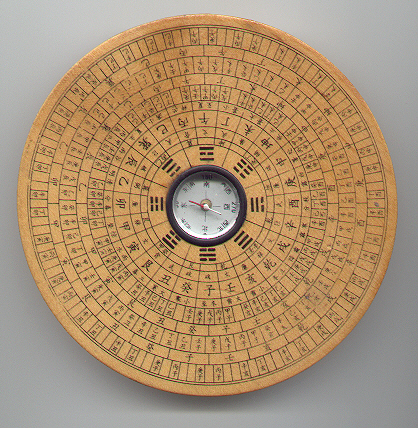
The Lepan, or
traditional geomantic compass, is used to determine portents for the living and
the dead. There are two different types, each having three parts. The former has
36 reticulations and is used to determine portents for a burial site. The later
has 9 reticulations and is used to determine the portents for the living.
Parts:
-
ž Base Plate: Earth
-
ž Dial Plate: Heaven
-
ž Magnetic Compass: Heaven pool; pole star; points south
Reticulations:
Former: 9 x 4 = 36 reticulations for the dead
ž
Heaven Plate:
1)
Former Trigrams of Fu
Xi
2)
Later Trigrams of Wen Wang: 9 Stars
3)
8 Positions of Baleful Spirits: determines unlucky
burial positions (24 mountains)
4)
4 and 8 Ways of Wang Zhuan: determines
auspicious position in land of the dead for good rebirth (8 major planets)
5)
9 Star and Separating the Dragon Ring: determine
lucky dragons on land or rivers surrounding site (64 hexagrams)
6)
Earth Valley Needle: suitable tombstone position
finder (changing 64 hexagrams)
7)
Yin
and Yang Dragon Ring: 10 stems/12
branches (24 fortnights of the year)
8)
24 Months, 5 Dragons (elements): determine
beneficial and hazardous elements to the deceased (28 constellations)
9)
Baleful and Evil Ring: determine spirits that may
cause misfortune or accident to the family of the deceased (360°)
10)
72 Points of the Dragon veins through the Mountain
11)
Through Mountain Later Ring
ž
Human Plate:
12)
Human Pool (stems and branches of person's horoscope)
13)
Earth Spirit of 60 Dragons (60 points of good and bad luck)
14)
Through the Earth: determines the right door for the deceased into the
spirit world
15)
Through Earth and Mountain Trigrams: the trigrams are integrated with the
dragon points in the mountain
16)
Through Earth Dragon: auspicious sites of burial
17)
Astrology Ring: checks balance (5 aspects and horoscope)
18)
Heaven Pool Adjustment Needle (yin
and yang)
19)
246°
Compass Ring (auspicious river directions)
20)
28°
Compass Ring (auspicious burial near rivers)
21)
37
Ð
of Deceased (the dead and qi)
22)
Lonely and Prosperous Positions of the Dead
23)
Hexagrams Reappearance (further burial advice)
24)
Stems/Branches Combine to Find 5 Elements (5 aspects of dead)
25)
12 Islands/9 Palaces
26)
Life Star Ring: ruling planet of deceased
27)
24 Mountains: determines
Ð
of sunrise in relation of grave
28)
3 Generals on Duty: determines the spirit that rules the deceased
29)
12 Gods in Command: 12 Palaces
30)
Horse Palace Ring: determines if deceased soul will wander or be content
(31 auspicious points of the soul)
31)
Horoscope of deceased
ž
Earth Plate:
32)
Heaven Degree Ring: determines the element of the heavenly spirit (5
elements of deceased)
33)
10°
of 60 Dragon Points
34)
Latitude and Longitude of site
35)
2 Branches of the Dead: dead branches left over from stems and branches
36)
28 Constellations
Later: 9 reticulations for the living
1)
8 Trigrams
2)
Symbols of 9 Stars; 12 Branches
3)
24 Mountains: 8 correspond to 4 cardinal directions
(may appear in 3 rings: heaven, earth, man); 10 Stems
4)
8 Tzu Wei Stars (in charge of Pole Star, Purple
Star)
5)
64 Hexagrams
6)
64 Hexagrams
7)
24 Solar Calendar Terms: 15° of sun position
8)
28 Constellations: determine position and time of
burial
9)
360°